
Bite‑Sized Learning for Big Change
The pace and scale of change across the Middle East are fundamentally redefining how a company’s leadership must manage human capital. With industry developments accelerating rapidly, it is imperative that businesses continually implement new practices and regulations in the workplace. If teams fail to adapt alongside these shifts, they remain unequipped to handle future demands in their tasks or work environment.
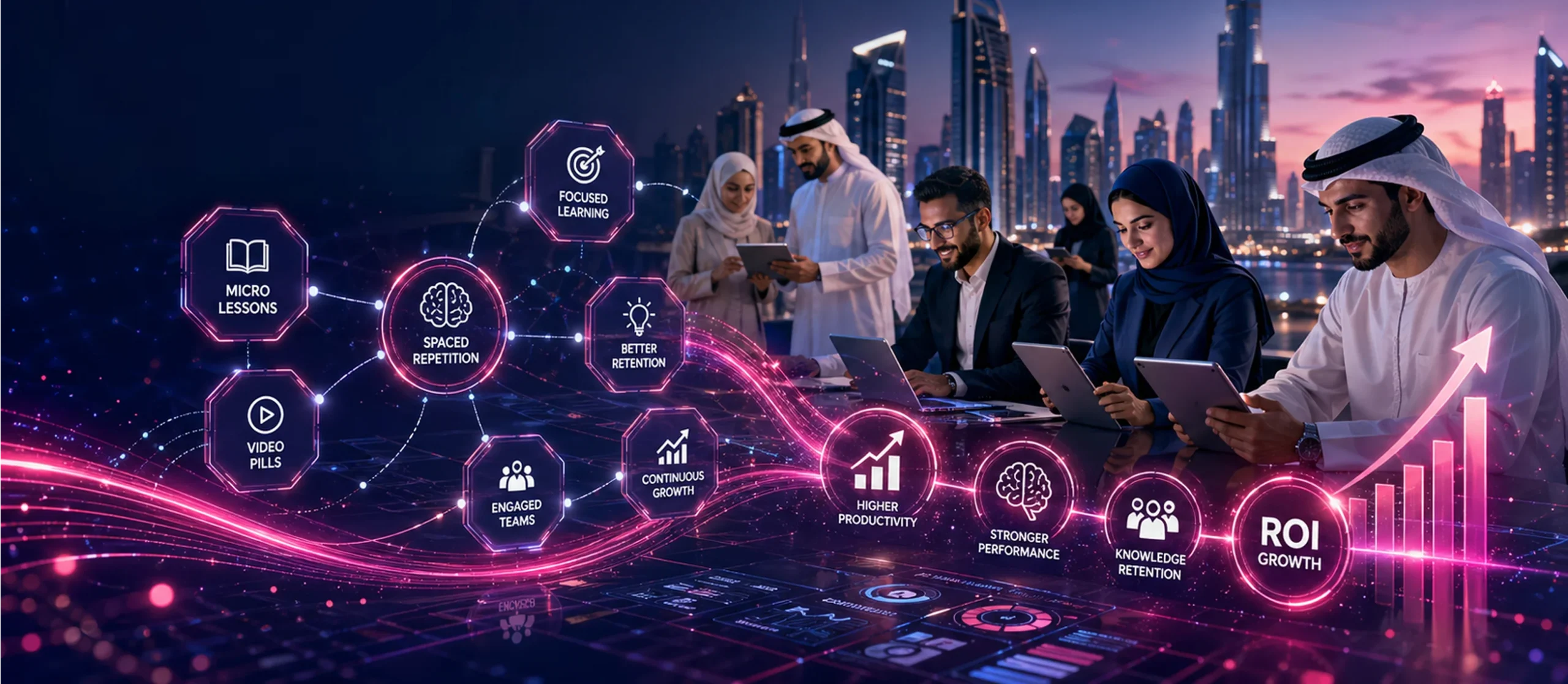
Fortunately, upskilling your workforce with new skills does not require a major time commitment. High-performing leadership teams are increasingly adopting flexible microlearning, delivering relevant critical knowledge in short bursts to drive productivity, enhance employee engagement, and secure a highly measurable ROI from training.
The Cost of Inaction: Training vs. Status Quo
Investing in training programmes is the primary driver of innovation and long-term revenue. When comparing the outcome of investment versus stagnation, the effectiveness of L&D becomes clear:
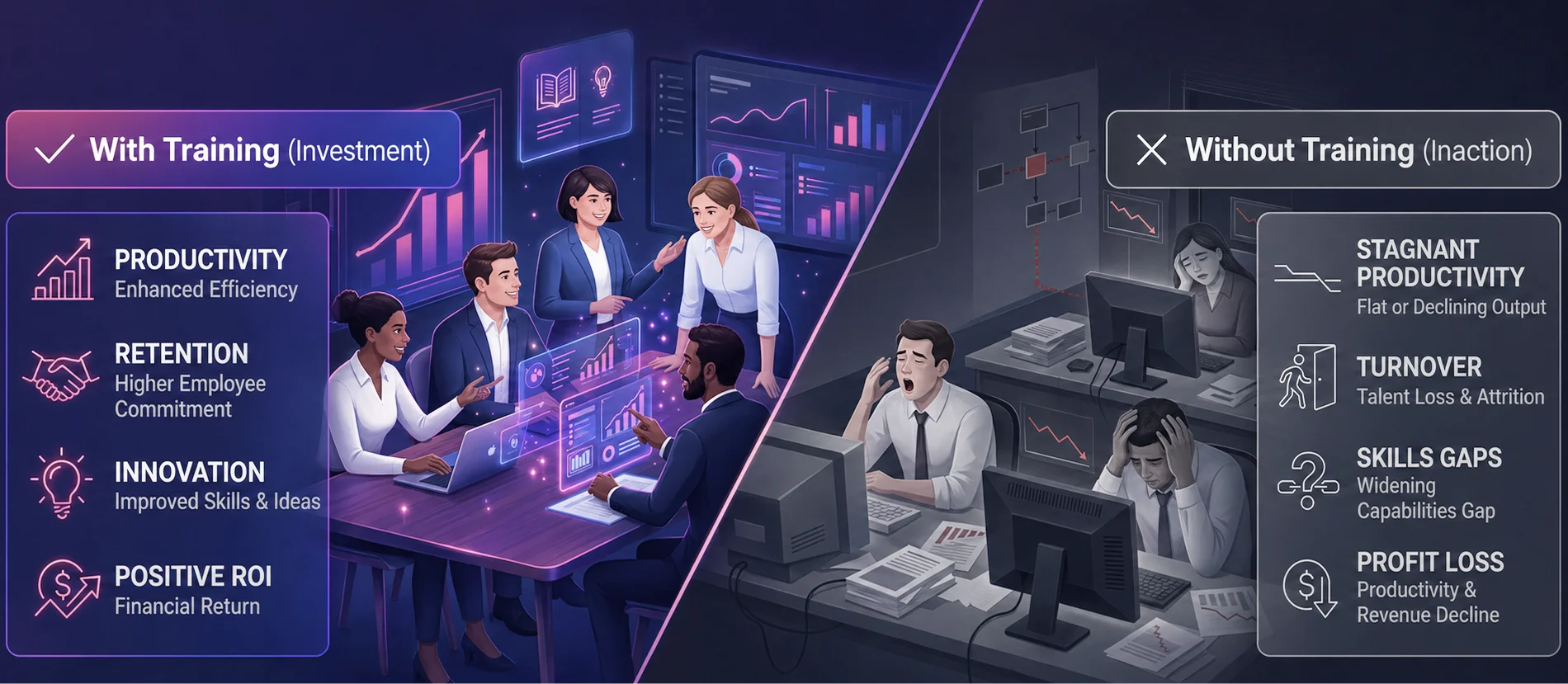
- With Training (Investment): Increased productivity and efficiency due to Reduced time-to-productivity, higher employee retention, and a positive financial ROI from training.
- Without Training (Inaction): Stagnant productivity, higher employee turnover, and a widening improvement gap leading to profit loss.
01. The Crisis Paradox: Why L&D is Your Best Defense in a Downturn
Don’t Stop is the Right Decision in the Face of Recession
Whisper the words ‘recession’ or ‘downturn’ in a boardroom, and a company’s training budgets are often the first ‘luxury’ expenditure targeted for reduction. However, historical data proves this to be a fundamental misstep; during the 2008 economic crisis, 63% of organisations reduced their training programmes and L&D expenses for short-term relief.
In hindsight, companies that continued to support ongoing learning, such as Mailchimp, capitalised on the post-crisis workplace and outperformed their competitors. Cutting these opportunities risks alienating high-performers; moreover, the cost of inaction is severe. Experts estimate the average cost of replacing an employee is around 150% of their annual salary. Ultimately, maintaining a robust organisational development strategy is a vital resilience mechanism to crisis-proof business operations.
02.The Science of the “Bite”: Beating the Forgetting Curve
Where Less is Truly More
Traditional hour-long seminars are fundamentally flawed when it comes to long-term retention and operational efficiency. Conventional forms of learning like seminars and lectures can be difficult for a team to engage with when they have other tasks to manage for the day. These long lessons result in significant employee time costs and lost operational hours, as scheduling and resource management become major logistical challenges. Furthermore, according to the Ebbinghaus Forgetting Curve, learners forget a staggering amount of new information almost immediately; after just one hour, only about 30% of the training content is retained.
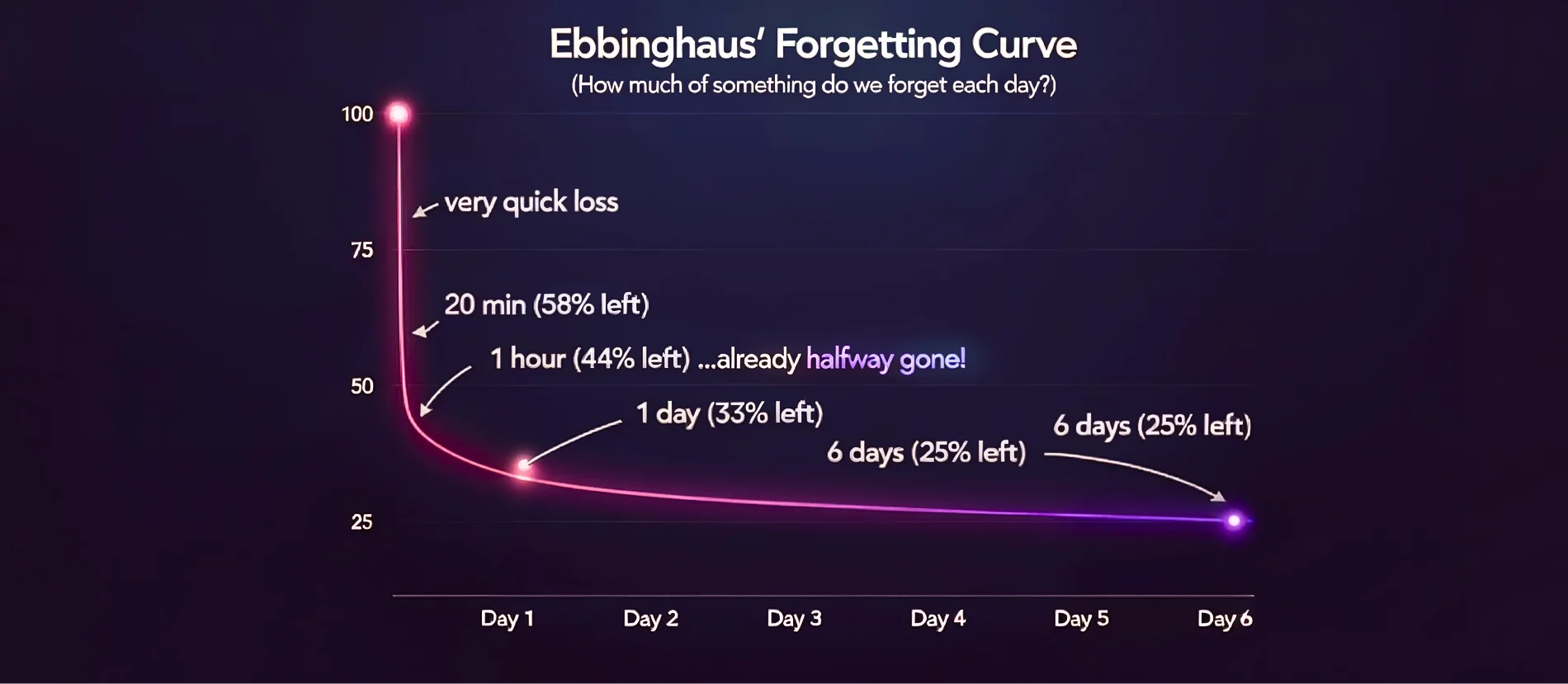
The Ebbinghaus Forgetting Curve Demonstrates the Rapid Drop in Knowledge Retention Over Time
Bite-sized learning, or microlearning, fixes this cognitive leak through spaced repetition. It is a method in which lessons are redone at separate intervals to help establish the concept in learners’ minds. By delivering targeted, relevant small bits of information, this approach actively forces the brain to recall key concepts, improving problem-solving, recall and project planning, as well as lowering error rates.
03. The ROI of Development: Lessons from Global Leaders
Internal learning. External success
Investing in your workforce directly translates into measurable external success. For instance, when Accenture, a Dublin-based services company recognised as one of the world’s most ethical for its leading practices, revamped its training initiatives, the results were impressive. The company achieved a 20% increase in employee performance, a 30% boost in client satisfaction, and a 17% reduction in staff turnover.
This perfectly demonstrates the direct link between internal Learning and Development and improved Customer Experience (CX) metrics. Moreover, by adopting international training standards and transitioning to highly engaging e-learning platforms, global leaders like IBM have found that employees can absorb nearly five times more material without spending additional time away from their jobs.
Similarly, during Motorola’s renowned Six Sigma era, the company achieved an astonishing 33-to-1 return on its training investments. For every dollar spent on development, they saw $33 returned through gains in efficiency and quality.
04. Actions and Case Studies: From Training Programmes to Cultural Change
How Mundipharma and Social Station Achieved Successful Transformation
True transformation in corporate learning requires far more than adopting; it demands a fundamental shift in developing new culture.
We can observe the profound impact of this philosophy in global industry benchmarks, such as Mundipharma in the pharmaceutical industry, which has trained the employees of its global and regional client organisations. This training has, over time, helped develop their skills. Participants include LIFE Pharmacy – LIFE Health Care Group, Nahdi Pharmacy, Boots, Supercare Pharmacy, Aster Pharmacy, Binsina Pharmacy, and Ali AbdulWahhab (AAW). In the Conference “Pharma eCommerce Trends & Future”, presented by Anas Almarie in 2022. This is achieved by developing new experiences that help these organisations increase sales, which in turn also boosts the company’s sales.
At Social Station, this ethos of prioritising human impact over fleeting digital hype is the core of my methodology. As the Managing Director of Social Station, I lead a team dedicated to being a digital marketing growth partner that connects the UAE and the wider GCC to global standards. My approach is built on a unique combination of roles: I am an active practitioner running a boutique digital experience agency in Dubai, and an academic who serves as a lecturer and trainer at elite institutions like the University of Dubai, and Dar Al Hekma University in Jeddah – KSA, Digital Marketing Institute – Ireland, in addition to other training institutes.
At Social Station, my leadership transforms the agency from a service provider into a strategic growth and experience partner. We have moved completely away from generic, “broad-stroke” learning in favour of highly tailored, data-driven personalised training roadmaps. I leverage my experience as an international jury member for excellence awards in Digital Marketing, Customer Experience (CX), and Employee Experience (EX) like International Business Excellence Awards, International Business & Leadership Awards, and Gulf Sustainability and CSR Awards to ensure our agency’s frameworks fill specific competency gaps that hinder a company’s competitive edge.
By integrating the global standards required for excellence with the agility of a digital leader, I oversee the development of training programs that don’t just “inform”, they actively transform an organisation’s culture.
To ensure our training ROI is a verified business result rather than a theoretical concept, we integrate a rigorous, data-driven measurement framework into every learning experience. This approach gives the ability to make informed decisions by continuously measuring the impact of learning on both people and performance. It establishes a clear understanding of skill development, shows how quickly employees become effective in their roles, and links learning activity to measurable business results such as productivity and revenue. At the same time, ongoing employee feedback provides insight into engagement and relevance, helping ensure the experience supports motivation, adaptability, and a healthy workplace culture.
As an integral part of my training design philosophy, I rigorously apply Bloom’s Taxonomy, a seminal framework for categorising educational goals and objectives. This hierarchy was originally developed in 1956 by a committee of dedicated educators, meticulously chaired by the influential psychologist Benjamin Bloom.
The core purpose of integrating Bloom’s Taxonomy is to ensure that the learning experience progresses beyond simple recall and instead fosters a comprehensive mastery of the subject matter. The original taxonomy, often referred to as the Cognitive Domain, is structured into hierarchical levels that represent increasing cognitive complexity:
- Knowledge (Remembering): The foundation, requiring the recall of facts, terms, basic concepts, and answers.
- Comprehension (Understanding): Demonstrating an understanding of the facts by organising, translating, interpreting, giving descriptions, and stating the main ideas.
- Application (Applying): Using the knowledge learned in a new or different way, such as solving problems or performing tasks.
- Analysis (Analysing): Breaking down information into its component parts to understand its organisational structure; differentiating between facts and inferences.
- Synthesis (Evaluating – in the revised taxonomy): Creating, inventing, composing, hypothesising, planning, or designing something new. (In the 2001 revised taxonomy, this was largely replaced by Evaluating and Creating.).
- Evaluation (Creating – in the revised taxonomy): Making judgments about the value of ideas or materials; justifying a decision or course of action.
By mapping learning objectives and assessment methods against these levels, I ensure that the training program is not only comprehensive but also intentionally guides participants from lower-order thinking skills (like remembering facts about training ROI) to higher-order thinking skills (like analysing a specific GCC team’s training metrics and creating a new micro-learning strategy). This structured application of Bloom’s framework is fundamental to maximising the training’s effectiveness and, consequently, its return on investment (ROI).
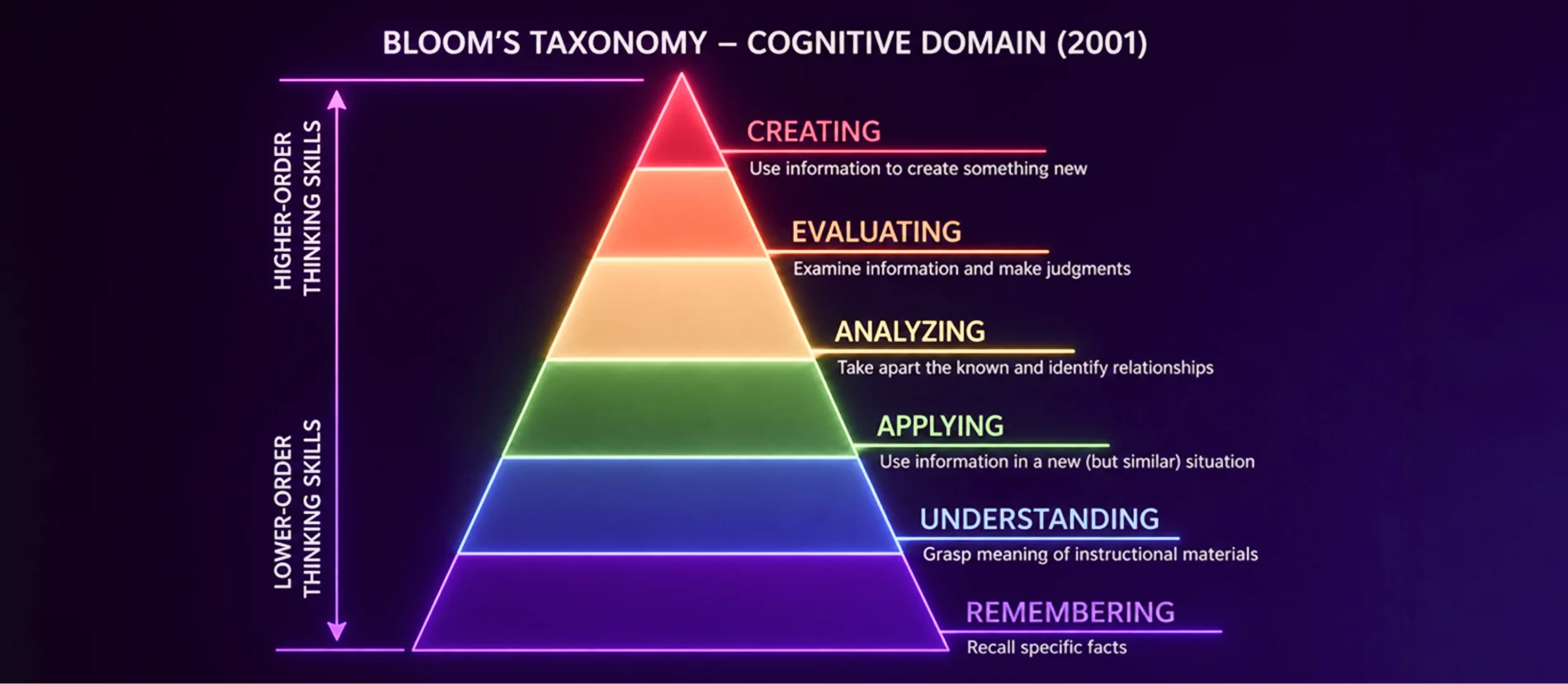
Bloom’s Framework
This comprehensive procedure ensures that Social Station does not just “deliver” training; we provide a verified ROI calculations model that helps you measure impact, not just completion. My personal obsession with these small details ensures that we provide the strategic direction needed to guide your workforce toward measurable growth.
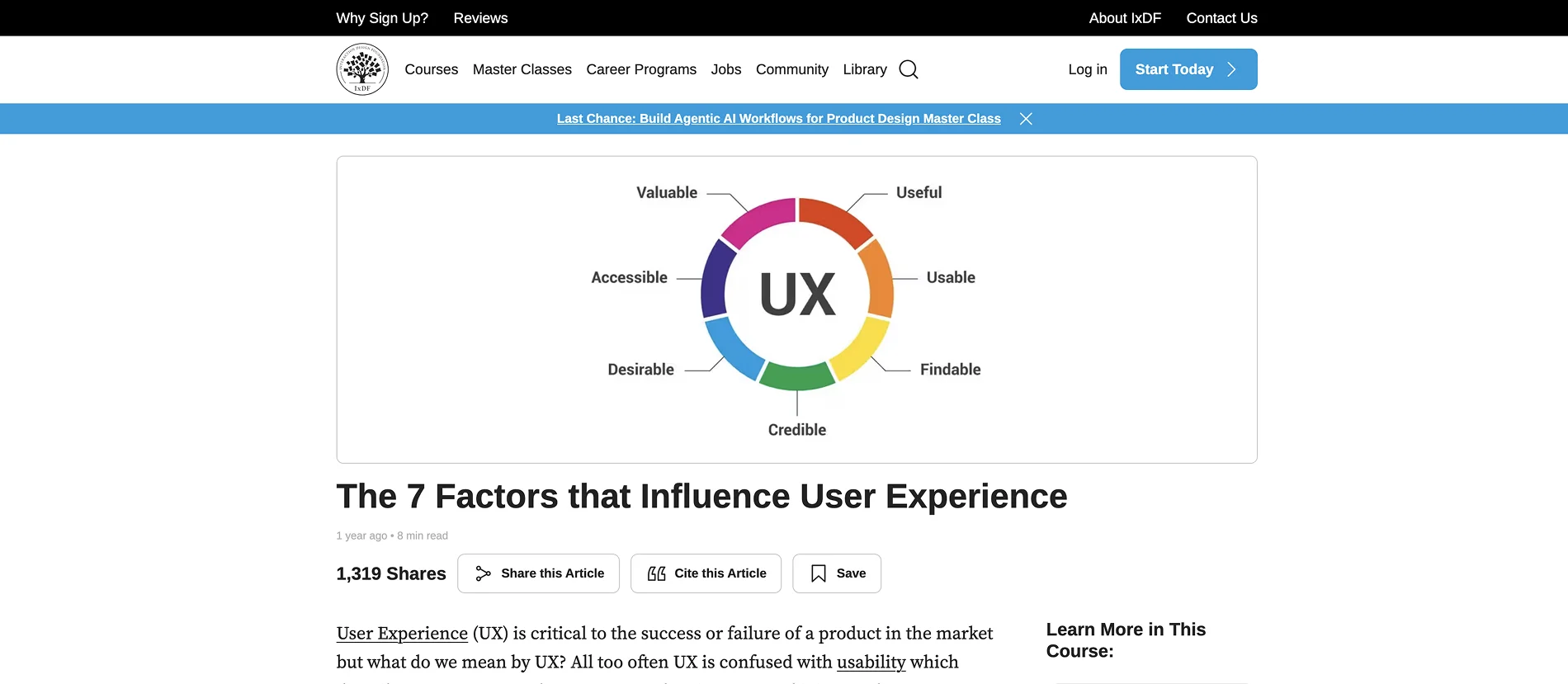
Example for Bite-size Training Presenting Knowledge Through Articles Demonstrating the Agency’s
Internal Model for High-engagement Learning
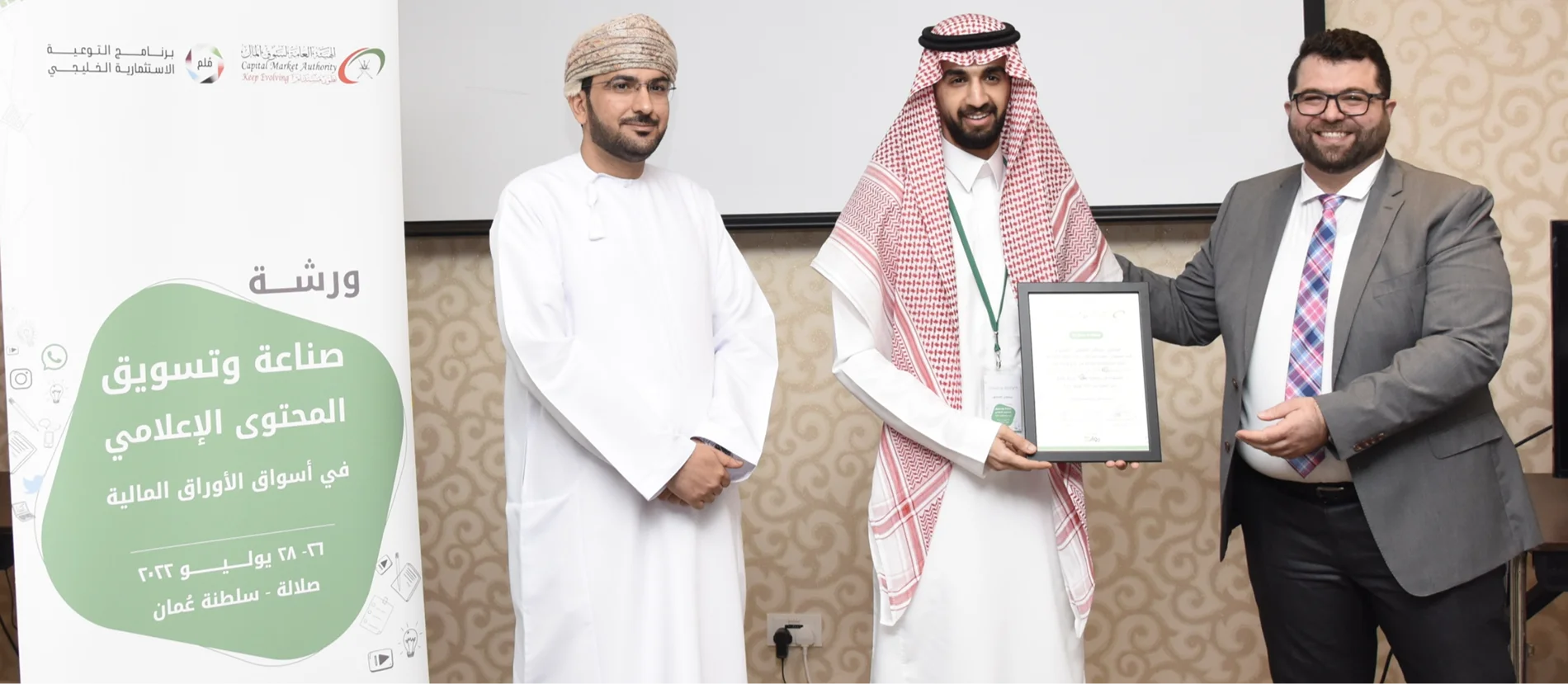
Executing this vision requires a direct and individual approach. I operate beyond the scope of an agency, serving as a dedicated educator who personally transfers advanced strategic expertise to regional professionals seeking to outperform their markets. This commitment has included collaboration with the Capital Market Authority in Salalah, Oman, in partnership with Rawabet Training, where I delivered structured guidance on financial market content marketing. Professionals from the UAE’s Capital Market Authority also participated in this programme.
Here are some feedback from the trainees about the training:
- “Mr. Anas’s style was incredibly engaging. In workshops like this, one might typically lose focus, but his lecture was so captivating that it kept me in a state of intense concentration.
- “I was familiar with only a quarter of the tools used in marketing and content creation; Mr. Anas, however, introduced us to other tools we knew absolutely nothing about. Previously, whenever we attempted to identify the right audience, the process would consume a great deal of time.”
- “Mr. Anas provided an excellent start to developing my work by introducing me to tools that were completely new to me.”
- “The session was incredibly informative and practical packed with valuable insights, real-life examples, and up-to-date strategies for growing online presence. I walked away with actionable tips I can apply immediately to my work. Highly recommend this center for anyone looking to upgrade their skills in digital marketing and social media” – Dima Dehni.
- “We extend our deepest thanks and gratitude to the exceptional trainer, [Anas], for the valuable knowledge and expertise he shared with us throughout this training course.”
- “The training days were filled with enrichment, constructive dialogue, and inspiring experiences that will remain etched in our memories.” – Aisha Almazrouei.
05. Powering the National Vision: The Arabian Gulf’s Human Capital Future
Typical Cases with Ideal Implementation
Every nation in the GCC (Gulf Cooperation Council) has developed a specific framework to transition into a knowledge-based society, placing people at the centre of long‑term success. This focus places human capital at the core of their attention, driving organisational goals across the GCC toward continuous improvement and innovation. These strategies show how investing in skills, education, and opportunity is seen as the strongest way to support teams, institutions, and future generations. The following examples reflect how each country translates this belief into action through its national vision:
Dubai 2040:
The Dubai 2040 Urban Master Plan is a comprehensive, sustainable development strategy that places human capital at its core, aiming to make Dubai the world’s best city to live, work, and invest in. With a “people-first” approach, the plan prioritises quality of life by expanding green spaces, enhancing public transport connectivity, and creating integrated urban environments. It aims for 55% of residents to live within 800 metres of a main public transport station, supporting accessibility, wellbeing, and productivity.
n parallel, Dubai introduced the Government Leaders Programme (GLP) as a governmental initiative for the UAE Federal Government to develop future leadership capabilities. I participated in the programme in 2017, delivering training for future leaders on leveraging LinkedIn as a leadership and influence platform, highlighting the vision and leadership of HH Sheikh Mohammed bin Rashid Al Maktoum, Ruler of Dubai, and HH Sheikh Hamdan, Crown Prince of Dubai.
UAE 2071
UAE Centennial 2071 is a long‑term national plan to make the UAE a leading global country by 2071. It focuses on a future‑ready government, advanced education, a diversified knowledge‑based economy, and a happy, cohesive society. The strategy prioritises Emirati values, global leadership, sustainability, innovation, and preparing future generations to drive long‑term national success.
United Arab Emirates (Vision 2031):
The UAE is aiming high, focusing on human capital as the prime of development. As the founding father Sheikh Zayed bin Sultan Al Nahyan, stated: “True wealth lies in people, not in money or oil. Money itself has no value if it is not dedicated to serving the people”.
I was pleased to serve as a prominent trainer, collaborating with the Arab Youth Center as an expert instructor and mentor. It was a key experience to contribute to the Young Arab Media Leaders initiative, where I applied my expertise in training the next generation of Arab media professionals in digital growth and branding.
KSA Vision 2030:
Saudi Arabia’s commitment to human capital development is evident through Vision 2030’s Human Capabilities Development Programme, which aims to boost the efficiency of training across all levels. As articulated by HRH Princess Reema bint Bandar Al Saud, the Kingdom views its human capital as the “New Currency” essential for a competitive economy. This vision was put into practice in my own career when, in 2015, I delivered a keynote training on digital marketing and strategies at the Asharqia Chamber of Commerce-KSA, directly contributing to the goal of enhancing trainees’ skills in the digital realm.
Oman (Vision 2040):
The vision of nations, as exemplified by the late Sultan Qaboos bin Said of Oman who stressed the importance of people collaborating to build a future and develop potential, often centres on creating a knowledge-based society through inclusive, lifelong learning. Oman’s goal of developing competitive national talent aligns with this perspective.
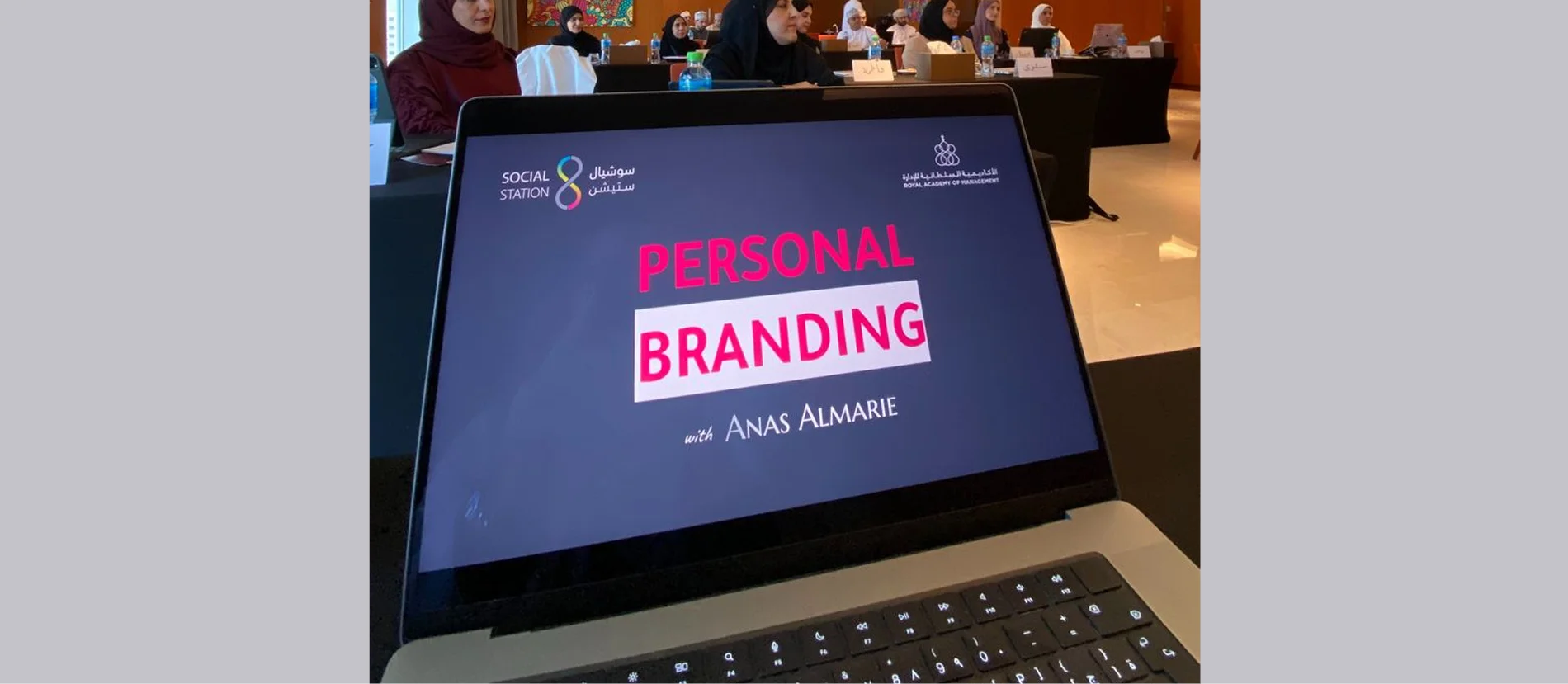
My experience training dynamic leaders at the Royal Academy of Management Oman, where I focused on actionable personal branding strategies, highlighted a crucial takeaway: true engagement is a catalyst for real growth. This occurs when one strips away corporate jargon, tailors the learning roadmap to the individual, and fosters a genuine human connection.
During that time, when AI was emerging for the masses, I discussed its role with Royal Academy of Management Dr. Ali bin Qassim Al Lawati, Chairman of the Royal Academy of Management Oman. We concluded that AI is a necessary enabler for leaders and researchers, not a substitution for them.
Bahrain (Vision 2030):
Bahrain seeks sustainability and fairness by providing high-quality training in advanced skills to ensure global competitiveness in its 2030 Vision. H.E. Shaikh Salman bin Khalifa Al Khalifa, Minister of Finance and National Economy at the Kingdom of Bahrain, has a great statement: “The human capital is our most valuable resource in the Kingdom of Bahrain”.
From 2015 to 2017, I contributed to the training of the Social Media Club and the University of Polytechnic Bahrain. My efforts were focused on fostering a digital mindset to help them navigate the rapidly evolving digital landscape.
Qatar (National Vision 2030):
Qatar is committed to building a world-class educational system that prepares citizens for success in a changing world with complex technical requirements. As also stated by HH Amir Sheikh Tamim bin Hamad Al-Thani that “human capital is the true wealth of any nation”.
I participated in the Pierre Fabre MEDR 2023 Moyen Orient, which was hosted by The Pierre Fabre Middle East Digital and Retail Summit (MEDR). My participation focused on the digital footprint and power of Qatar’s residents.
Kuwait (Vision 2035):
The “Creative Human Capital” programme focuses on reforming the education system to better prepare youth to become competitive and productive members of the workforce.
By leveraging technology like AI, every manager can now shift from reactive processes to predictive decision-making. This allows leaders to make informed decisions about talent and expansion with far greater precision.
Localisation and the New Leadership Profile
This requires a new profile of leadership. In 2026, the demand is for leaders who combine strategic thinking with empathy, adaptability, and the ability to lead AI-enabled, diverse teams. By aligning localisation goals with long-term capability building, GCC employers are creating a resilient, locally rooted workforce capable of thriving in an increasingly complex global environment.
Conclusion
Your Checklist for Success
The transition from traditional lectures to individualised, high-engagement learning models is no longer a trend; it is a strategic necessity for any GCC organisation aiming to outperform the market. As we have explored, the “luxury myth” of cutting training during economic downturns is a costly paradox; the 150% cost of replacing a high-performing employee far outweighs the investment in their growth.
To secure a true Training ROI, leaders must move beyond generic content and embrace the science of the “bite”. By leveraging microlearning and spaced repetition, we can effectively beat the Ebbinghaus Forgetting Curve, ensuring that critical knowledge is not just delivered, but deeply retained and applied to complex project planning.
Your 36-Month Strategic Roadmap
Moving to personalised, highly engaging training isn’t just a good idea, it’s the competitive edge your organisation needs. To ensure your learning investments pay off, follow this strategic approach:
Phase 1 | 0–6 Months: The Agile Launch (Planning and Initial Development)
Rather than getting stuck in perpetual planning, start aligning the training content with your company’s immediate needs:
- Clarify organisational goals, capabilities and Gaps.
- Define learning outcomes.
- Develop content development.
- Apply new skills training to the onboarding process.
Phase 2 | 6–18 Months: Scaling Personalised Roadmaps
With the first modules live, the focus shifts to scaling the learning experience across the entire organisation’s structure:
- Start Designing Individualised Learning Paths.
- Embed learning into daily work allowing them to upskill in minutes without disrupting daily tasks.
- Use spaced repetition to deliver information, ensuring employees retain 58% of knowledge after 20 minutes.
- Use work-sample assessments to measure the effectiveness of the training content.
Phase 3 | 18–36 Months: Systemic Mastery and Predictive ROI
Here training moves from a managed project to a culture of continuous improvement:
- Measure business impact.
- Leverage AI to shift from reactive training to predictive decision-making, anticipating future skills needs before they become gaps.
And now, these learning pathways are fully embedded into the annual plan and budget, ensuring long-term support and systemic growth.
A Partner in Your Growth
Execution often demands a direct and personal approach. We deliver tailored, data‑driven training roadmaps and strategic consultations that convert ideas into measurable cultural change and sustained performance.
So, ready to transform your team into a high-performance engine?
Contact Anas and the Social Station team to design your specialised training roadmap and secure a leading position in the GCC’s digital economy.
Remember, the true “New Gold” of any region is human potential.